Insight

What the rise of foldable phones means for apps

What the rise of foldable phones means for apps

Anthony Main

This blog was originally written in 2022 but has been updated in 2026 to fit the latest phone releases.

Ever since Samsung released the Galaxy Fold in 2019, a debate has raged over whether flip and fold phones are the future of mobile technology. By 2025, will we all have an elegant foldable phone in our pocket? Or is the technology a flash in the pan?

Today (Sept 2022), flip and fold phones are still a relatively niche market. Of the 1.5 billion smartphones sold globally in 2021, only 7 million were foldables (Wired). However, that figure (and foldable’s total market share) is growing quickly. Foldable sales in 2021 represented a 264.3% increase on 2020s numbers and annual sales are expected to hit 27.6 million units by 2025 (IDC). Samsung has just launched the Galaxy Z Flip 4, while Xiaomi, Huawei and Motorola have all announced new foldable releases, too. This suggests foldable phones are here to stay. Or does it?

In this article, we examine whether foldable phones are the future of mobile technology and how that impacts app developers. But a quick note before we start. Throughout this piece, we use the term flip phones to refer to both flip and fold phones. We recognise there is a difference but the base technology is largely the same and we feel comfortable bracketing them together for convenience’s sake.
 

2026 update - from experiment to an established category

Fast forward to today, and the foldable conversation has quietly shifted. What once felt like a bold experiment has now become an established part of the smartphone market, with manufacturers investing in different form factors and users becoming increasingly familiar with the idea of a device that can change shape. That changes the conversation for product teams, too. Foldables are no longer something to design around if they eventually become popular enough. They are part of the wider range of screen sizes and shapes that a modern app needs to be prepared for.

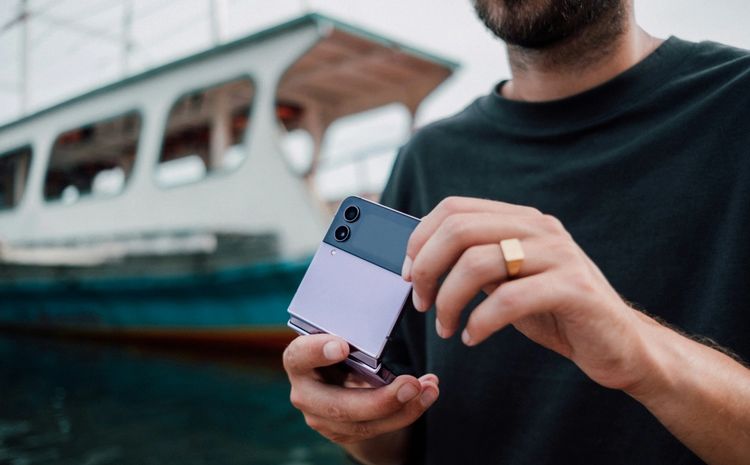
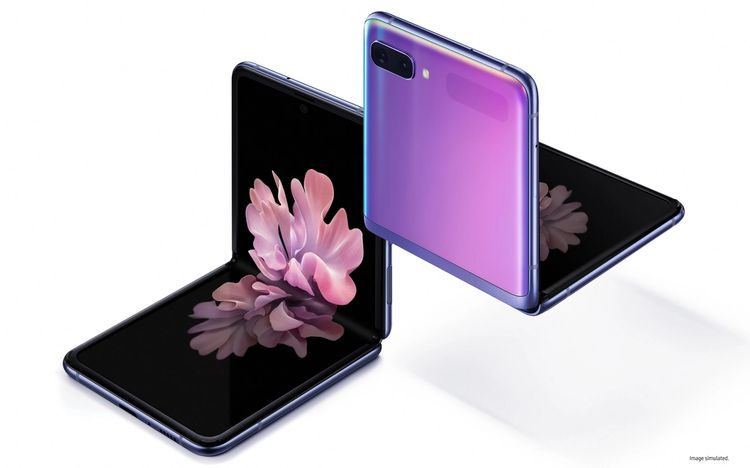
Samsung Galaxy Z Flip6

Samsung, in particular, has doubled down on its commitment to foldables. The Galaxy Z Flip and Z Fold ranges are no longer framed as futuristic novelties, but as refined, repeatable upgrades that sit comfortably alongside its flagship devices.

Each iteration has focused less on proving the concept and more on improving durability, battery life, camera quality and software polish - all signs of a manufacturer playing the long game rather than chasing headlines.


Are foldable phones the future?

The question has changed. It is no longer simply whether foldables will become the future of mobile technology. They have already had enough influence on the market that product teams need to consider what they mean for the products being built today.

That does not mean every business needs to redesign its app specifically around a foldable device. Adoption will vary by market, audience and use case. But it does mean treating foldables as a temporary phase or an edge case is becoming harder to justify.

For developers, the more useful question is what happens when a device can move between very different screen configurations. A product designed responsively from the outset can adapt to those changes much more naturally, while one built around fixed layouts may require significant redesign as new form factors appear.


There are hidden industry dynamics at play

Though it would be nice to think that the technology industry is perfectly meritocratic and the best, most useful products always rise to the top, it is simply not the case. Technological evolution depends on adoption. Adoption is determined by a range of other forces, many of them market-based.

Which brings us on to market forces, foldable phones and the giant elephant in the room. Apple. The company with the second-largest smartphone market share – a company renowned for its trendsetting, industry-defining technology – is yet to produce a foldable phone. That is not to say they won’t. There are rumours that Apple is scheduling a foldable phone release for 2024-2025, but the company does not comment on upcoming technology, so we have no way of knowing if that is true.

 
apple duo

2026 update - Apple has finally entered the foldable market

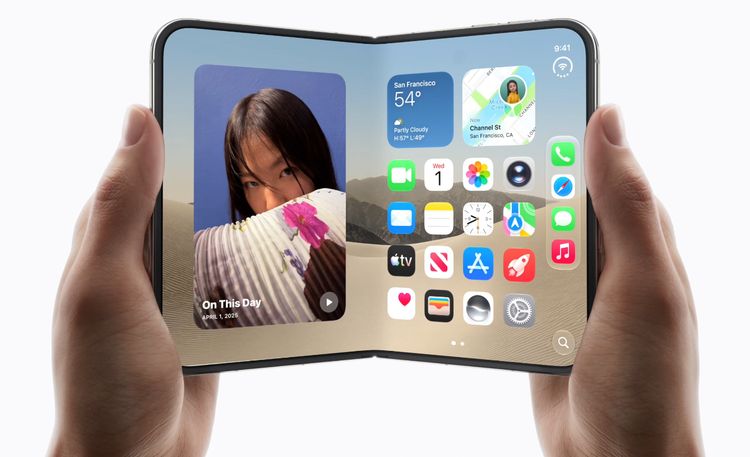
Well, the rumours can finally be put to bed. In September 2026, Apple officially unveiled the iPhone Duo, its first ever foldable iPhone and one of the biggest changes to the iPhone's design since the original was launched in 2007.

That makes this a particularly interesting moment for foldable technology. For years, Samsung, Huawei, Xiaomi, Motorola and others have been trying to prove that folding screens have a genuine place in the smartphone market. Apple has now made its position clear: foldables are no longer something happening around the edges of the smartphone industry. They are part of the iPhone ecosystem.

The iPhone Duo takes a slightly different approach to the category, opening to reveal a 7.6-inch display while retaining a 5.4-inch outer screen when folded. Apple says both displays share the same aspect ratio, allowing content to scale proportionally between them, while iOS 27 has been redesigned to adapt to the different ways the device can be held and used.

And that last point is perhaps more important than the hardware itself.

Apple isn't simply putting a folding screen onto an existing iPhone. The company has designed the hardware and software together, with the foldable format creating new opportunities for multitasking, gaming, photography, video calls and hands-free use. The camera experience, for example, makes use of the outer display in ways that aren't possible on a traditional iPhone, while the larger inner display gives apps considerably more room to work with.

For product teams, this also makes responsive design a priority rather than an assumption. A book-style foldable can introduce a large, square or near-square working area that looks and behaves very differently from the tall, narrow screens most mobile interfaces have traditionally been designed around.

That has implications beyond simply making an interface fit. Navigation may need to change position, content may need to reflow, controls may need to become more accessible across a wider layout and components that work well in a portrait phone view may suddenly have much more space around them. Designing these behaviours from the beginning is far easier than trying to retrofit them once a product is already in development.

The arrival of a foldable iPhone therefore makes one thing particularly clear: responsive design can no longer be treated as making a desktop layout shrink down to mobile, or making an existing mobile interface stretch when a larger screen appears. It needs to account for the possibility that the shape and context of the screen itself can change.

For app developers, this makes Apple's entry particularly significant. Until now, supporting foldables could reasonably be viewed as a decision based on the size of the Android foldable audience. With Apple now introducing its own interpretation of the format, product teams have another major ecosystem to consider, along with another set of screen sizes, orientations and interaction patterns.


A strategic attempt to change the rules of the game?

If you think we are overstating the importance of market dynamics in determining foldable technology’s success, think again. Conor Pierce, head of Samsung’s UK Mobile Division, stated explicitly that their foldable phones are a deliberate attempt to shake up the industry and erode Apple’s influence.

At the moment, people view smartphone technology through the prism of Apple vs the others. To counter this, Samsung wants to shift the discourse away from operating systems.

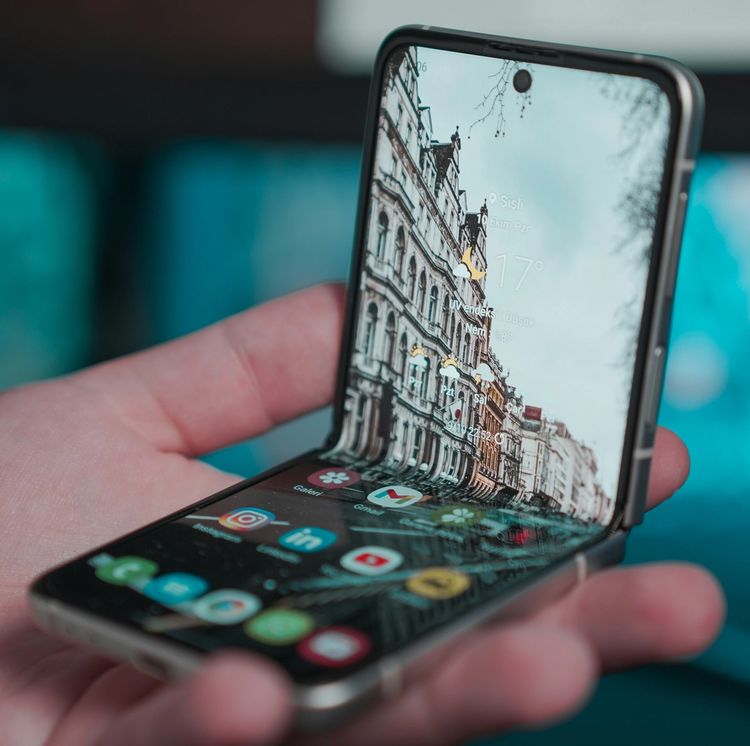
Flip phone - The Distance
“What we want to try to do is disrupt and change the game when it comes to an OS conversation. When you walk into a store, ‘do you want a folding phone or do you want a flat phone?’ should be the first question you’re asked”

Conor Pierce, in The Guardian

Marketing is another force at play in the foldable phone debate. When originally released, several designs (most notably the Motorola Razr) appeared to rely heavily on the nostalgia vibe. For some companies, emerging foldable technology seemed like a way to make money off a renewed interest in the light-hearted innocence of the pre-internet nineties and early noughties. Bucket hats, CDs, reboots of questionable ‘90s TV shows and clamshell phones are all back in. Didn’t you know?

This gave some credibility to the idea that foldable technology was a bit of a gimmick. Three years on, this theory does not hold up well. The big tech players are investing heavily in foldable and adoption is on the rise. If it was a gimmick at the start, it certainly is not now.


2026 update - Beyond Samsung is a crowded, competitive foldable landscape

Samsung may have led the charge, but the foldable market has now become a genuinely competitive space. Huawei, Xiaomi, Motorola, Google and, most significantly, Apple have all developed their own interpretations of what a foldable phone should be.

This growing diversity is important. It suggests that foldables are no longer being developed around a single dominant vision. Instead, manufacturers are testing different assumptions about how people actually want to use these devices. Do users want a compact phone that unfolds occasionally, or a tablet-like screen they access multiple times a day? Is the outer screen a convenience feature, or a fully functional interface in its own right?

As competition increases, so does pressure on software and user experience. Hardware innovation can only go so far on its own. The real differentiator is increasingly how well the device integrates with apps, services and daily workflows - which brings the conversation back, once again, to developers.


What do foldable phones mean for app developers?

The other key issue for foldable phones is app development. On the first release, app compatibility was one of the biggest complaints. Apps were not designed for this new type of device and a considerable number did not perform well. Some did not fit the screen, others did not function as they should and many were simply not available for download on foldable phones.

While those early teething problems have eased, they are not entirely gone. Foldable phones still pose several challenges for app developers. These include:

 
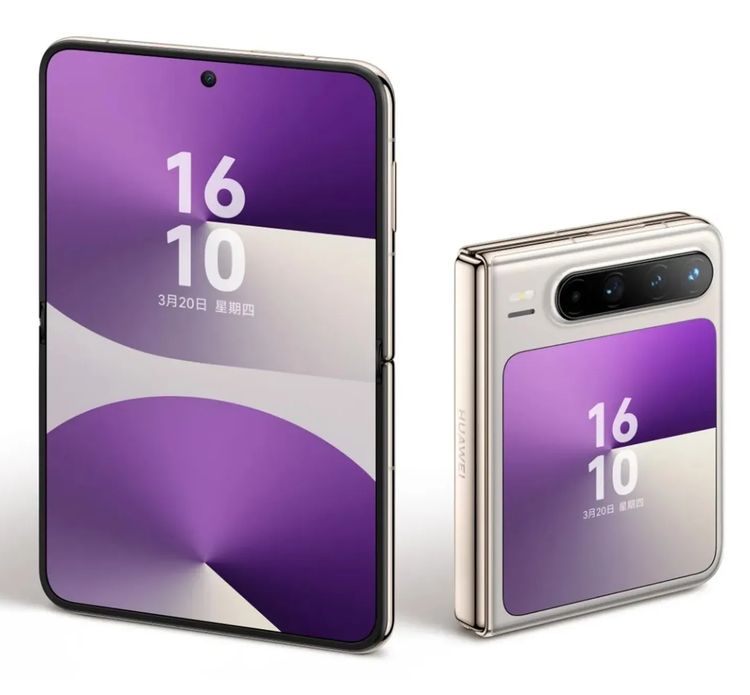
huawei foldable phone

Aspect ratio

For years, mobile app design has largely been built around tall portrait screens, with landscape layouts added where necessary. Foldables have changed that assumption. Different devices can introduce dramatically different aspect ratios, and book-style foldables can move between a conventional phone display and a much larger, square or near-square screen.

This means responsive and adaptive design needs to be considered at the beginning of a project, rather than treated as something to address if a particular foldable becomes popular. Layouts need to respond to significant changes in available space without making the interface feel stretched, empty or difficult to navigate.

Square and near-square screens are particularly important because they can expose assumptions that are easy to make when designing for a conventional phone. A layout that feels natural on a tall portrait screen may suddenly have too much horizontal space, while navigation and content hierarchies can become awkward if they simply expand without being reconsidered.

The answer isn't to create a separate version of an app for every possible device. It is to build flexible layouts and components that can respond intelligently to different dimensions and states.


Resizeable apps

Just as important is app continuity – how apps transition from one aspect ratio to another. Developers need to ensure that this transition feels natural and does not suffer from lag or bugs.


Multi-window for multitasking

A bigger screen size means there is more scope for multi-window multitasking. Browsing your photos on one part of the screen while typing a message on the other, for instance. Running multiple apps at the same time has the potential to radically alter the way we interact with our devices and how apps interact with one another. Developers will have to factor in new actions and gestures (such as drag and drop) to accommodate these capabilities.


Foldable states

Foldable phones also open up the possibility of a whole range of new display ‘states.’ With non-foldable models, there are two principal states. Portrait and landscape. But flip phones can be folded, open, or half-open. Apps may behave differently in each state.

When half-open, the top screen could be a chat interface and the bottom a keyboard, resulting in a display that resembles a traditional laptop setup. When open, the keyboard may take up less space, allowing for easier multitasking.

Secondary screens are typically included on the exterior of foldable phones to display notifications and other information, ensuring users don’t always have to open the device. These screens present another whole range of challenges and possibilities. What information should they include? How can they be used to streamline and simplify the user experience?

This is perhaps where foldable phones show the most potential. Whether app developers can take advantage of these capabilities may also determine how successful the technology is.


2026 update - Why foldables should now influence product design

When foldables first re-emerged, many product teams quite reasonably chose to wait and see. Supporting them felt like a future problem, something to revisit once adoption reached a meaningful level.

That approach is becoming less useful. More major manufacturers are committing to different versions of the format, and Apple has now brought the book-style foldable into the iPhone ecosystem.

For product teams, the practical takeaway isn't that every app needs a dedicated foldable experience. It's that responsive design needs to account for a much wider range of screen configurations from the beginning, particularly square and near-square layouts.

The same principles also make products better prepared for tablets, larger phones and whatever form factors emerge next. Foldables are therefore less about designing for one particular device and more about avoiding an app architecture that assumes tomorrow's screens will look exactly like today's.

flip phone
 

2026 - Foldables are changing how we design

Foldables have become more than a question of whether people will eventually replace their traditional smartphones. They have changed the assumptions we make about what a mobile device looks like, how much space an app has to work with and how users move between different ways of interacting with a product.

The arrival of the iPhone Duo makes that shift particularly difficult for product teams to ignore. Foldables are now represented across the major smartphone ecosystems, while book-style devices introduce screen configurations that are very different from the tall portrait displays that have dominated mobile design.

That doesn't mean every app needs a bespoke foldable experience. It does mean responsive and adaptive design should be considered from the beginning of a project, particularly when thinking about square and near-square layouts.

Foldables may or may not become the dominant smartphone format. We don't need to predict that to know they're already influencing how digital products should be designed.

If you're looking to create a foldable-friendly app for your business, The Distance can help.

 
contact us

Apply theses insights

Contact us to discuss how we can apply theses insights to your project