Insight

What will the next generation of apps look like?

What will the next generation of apps look like?

Courtney Smith

For years, when we talked about building an app, there was a fairly simple picture in our heads. You downloaded it from the App Store, opened it on your phone, tapped your way through a few screens and eventually got to whatever it was you actually wanted to do.

Maybe you booked a train, checked your bank balance, ordered some food, tracked your fitness or bought a pair of shoes. The app was the destination, and the interface was the route you took to get there. That model has served us pretty well.

But something interesting is happening now. The way we interact with technology is starting to change, and it is happening much faster than the traditional app model was designed for.

Instead of opening an app to find something, we can ask an assistant to find it for us. Instead of navigating through five screens to complete a task, an AI agent can potentially do it on our behalf. Instead of looking at a phone, we might speak to a device in our ear, glance at information through smart glasses or interact with technology through a watch.

The technology is changing, but perhaps the bigger change is happening somewhere else: our expectations are changing too.

In the UK, 54% of adults reported using an AI-powered digital assistant that understands natural language within the previous three months in the UK. Meanwhile, 56% had used AI that creates human-like text or speech in response to queries.

That matters because once people become comfortable saying, “Can you find me a cheaper train tomorrow?” or “Remind me what I need to take on holiday,” it becomes harder to convince them that they should go back to navigating a traditional interface just to achieve the same thing.

So, what does that mean for the apps we build today?

The short answer is that the next generation of apps probably won't look like apps in the way we're used to thinking about them.

And that doesn't mean the traditional mobile app is disappearing tomorrow, far from it. It means we're entering a world where the app becomes part of a much bigger product experience, one that can move between conversation, voice, automation, wearable technology, contextual experiences and traditional screens depending on what the user needs at that particular moment.

Let's explore what that could look like.
 

The app is no longer necessarily the destination

One of the biggest shifts we're seeing is a move away from the idea that a user needs to open your app to access your product. For years, the goal for product teams has often been to get people into the app. We measure downloads, active users, sessions, retention and engagement because the assumption is that if people are opening the app, they're using the product.

But what if the best experience doesn't require them to open it at all? Imagine you are running late for a train. Today, you might open your rail app, search for your journey, check the platform, look at delays and perhaps buy a ticket. There are multiple interactions involved, even though your actual goal is relatively simple: get me where I'm going.

Now imagine saying: “What's the quickest way for me to get to London tomorrow morning?”

An assistant understands where you are, knows the time, checks available services, considers your preferences and presents the best options. You choose one, and the assistant handles the booking.

The underlying rail app may still exist. Its booking system, customer account, payment infrastructure and journey data are all still incredibly important. But the user might never have opened it. That's a significant change in the role of an app.

We're already seeing technology platforms move in this direction. In February 2026, Google described a new Android model where users can delegate multi-step tasks to Gemini, allowing the assistant to interact with supported apps on their behalf. The examples include ordering food, coordinating a multi-stop rideshare and reordering groceries.

Google describes the shift quite clearly: success is increasingly about fulfilling the user's task, rather than simply getting them to open an app. That is a pretty fundamental change in product thinking. And it is something product owners should be paying attention to now.


Conversational interfaces will become another front door

We've spent decades designing graphical interfaces around menus, buttons, tabs, forms and navigation. They're not going anywhere, but conversation gives us another way into a product. The difference is that conversation allows people to explain what they want rather than having to understand how the product works.

Think about the difference between these two experiences.

Traditional:

Open app → search → select category → apply filters → choose item → check availability → book.

Conversational:

“I need somewhere to stay in Manchester next Friday, close to the city centre, and I'd like somewhere with parking.”

The second interaction doesn't require the user to know where the filters are, what terminology the product uses or which sequence of screens they need to follow. That's incredibly powerful, but it also introduces a challenge. A conversational interface isn't simply a chatbot bolted onto an existing app. If you approach it that way, you can very quickly end up with a chat window that technically works but doesn't actually improve the experience.

Conversational interfaces

The interesting opportunity is to rethink how people achieve outcomes. A conversation can become the starting point, with traditional UI appearing when it is useful.

  • Perhaps the user asks for a holiday… the assistant asks a couple of questions, searches options and then presents a visual selection of hotels.
  • Perhaps they want to make a payment… the conversation establishes what they want, but the final transaction is presented as a clear confirmation screen.
  • Perhaps they're comparing insurance policies… the assistant explains the differences conversationally, but a structured comparison makes the final decision easier.

This is where we think the next generation of interfaces becomes particularly interesting. The future isn't necessarily chat instead of UI. It's conversation and UI working together.

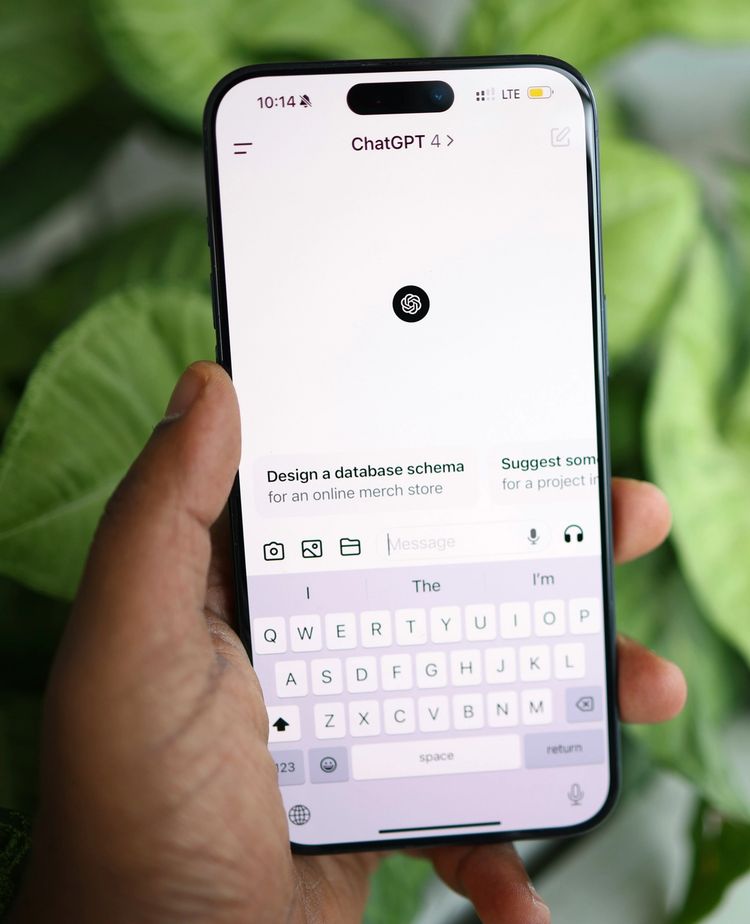
OpenAI's introduction of apps inside ChatGPT is an early example of this model. Apps can respond to natural language while also providing interactive interfaces such as maps, playlists and other visual components within the conversation. That gives us a useful glimpse into where things could be heading.


AI agents will move from answering to doing

There's an important distinction between an AI assistant and an AI agent. An assistant might tell you what you should do. An agent can potentially do it for you. That difference is going to have a huge impact on digital products.

Imagine asking an assistant: “Can you find me the cheapest flight to Barcelona next month?” That's useful.

Now imagine it can search flights, compare options against your preferences, check your calendar, identify suitable dates, make the booking, add it to your calendar and send you the confirmation. That's a very different product experience. The interface has effectively moved from interaction to delegation.

Instead of giving someone a tool and asking them to complete a workflow, you're giving them a system that can complete the workflow on their behalf. This is why the rise of agentic AI deserves attention from anyone building an app.

Gartner predicts that by 2028, 33% of enterprise software applications will include agentic AI capabilities, compared with less than 1% in 2024. It also predicts that at least 15% of day-to-day work decisions will be made autonomously through agentic AI by 2028.

And Gartner has gone even further in its 2026 research, estimating that up to $234 billion of enterprise application spending could be exposed to agentic AI between now and 2030, because agents can complete tasks across multiple systems without users needing to interact with every individual application.

That's not a prediction that every app is going to disappear. It's a prediction that the relationship between the user and the app is going to change. For product owners, that raises a much more useful question than “Should we add AI?” The question becomes:

Which parts of our product should a person continue doing themselves, and which parts could a trusted agent do for them?

That's a product strategy question, not a technology question.


Your app might become something other products interact with

This is one of the more subtle consequences of the agentic shift. Traditionally, you build an app for a person. Increasingly, you may need to build a product that can be used by both people and other software.

Imagine a hotel app. A person can open it and search for rooms, or an AI assistant could interact with the hotel's booking capabilities directly. The same underlying system needs to support both. That means APIs, authentication, permissions, structured data and clearly defined actions become even more important.

Your product needs to be understandable not just to a human looking at a screen, but to systems trying to determine:

  • What can this product do?
  • What information is available?
  • What actions can I take?
  • What requires permission?
  • What requires confirmation?
  • What happens if something goes wrong?

We're already seeing technology companies build the infrastructure for this. OpenAI's agent tooling, for example, includes capabilities around tools, orchestration, handoffs, guardrails and observability.

Android is also exploring ways for apps to expose capabilities to AI assistants, allowing users to delegate tasks rather than manually navigate through the app themselves.

This suggests something important for product teams: Your backend and integrations may become just as important as your interface. The UI is still important, but it is no longer the whole product.

 
voice interfaces

Voice will become more natural

Voice interfaces have been around for years. Siri, Alexa and Google Assistant have already taught people that they can speak to technology, but anyone who has used an early voice assistant knows the limitations.

You had to learn the right commands. You had to phrase things in a particular way. And when the system misunderstood you, you often ended up repeating yourself in increasingly robotic language. That isn't how people naturally communicate. The next generation of voice interfaces is different because AI can understand context, intent and more natural language.

In the UK, around 26.7% of internet users aged 16 and over were using voice assistants each week in Q2 2025. YouGov also found in January 2025 that 30% of British adults use digital assistants at least once a day.

So voice isn't some futuristic interaction waiting to arrive. People are already using it. What's changing is what they expect it to be capable of. Instead of: "Set a timer for ten minutes.” We're moving towards: “I've got a meeting in ten minutes. Remind me to take the documents with me when I leave.” Or: “Find me a restaurant nearby that can fit six people at 7pm and has good vegetarian options.”

The technology has to understand intent rather than simply recognise words. For app designers, that means thinking about voice as more than an accessibility feature or an alternative input method. It can become an entirely different way of navigating a product. And voice is particularly interesting when it leaves the phone.


The phone won't always be where the experience happens

The smartphone has been the centre of our digital lives for a long time. But we're increasingly surrounded by devices that can provide parts of the experience without requiring us to pull out our phones, such as:

  • Smartwatches
  • Wireless earbuds
  • Smart rings
  • Smart glasses
  • Cars
  • Home devices
  • Headsets
  • The growth of wearables is worth watching here

IDC reported that 145.7 million wearable devices shipped globally in Q1 2026, up 4.3% year-on-year. It forecasts 2026 smart glasses shipments of 13.6 million, representing 41.4% growth, while smart rings are forecast to grow 12.8%.

Even more strikingly, IDC reported that display-less smart glasses shipments grew 167% year-on-year in Q1 2026.

That doesn't mean everyone will be wearing AI glasses next year. But it does tell us something important: the number of places where a digital experience can exist is expanding. And that creates a very different design challenge.

Instead of designing one interface for one screen, we're designing an experience that might move between several devices.


The best interface might depend on the situation

Imagine you're using a travel app. When you're sitting at home planning a holiday, you might want a full-screen interface with photos, maps, prices and detailed information. When you're walking through an airport, you might want a simple notification: “Your gate has changed to 24.”

When you're carrying luggage through the terminal, you might want spoken directions through your earbuds. When you're boarding the aircraft, you might want your boarding pass on your watch. And when you arrive, perhaps your smart glasses provide walking directions without requiring you to hold your phone up in front of you.

It's the same product. It's the same journey. But the interface changes depending on where you are, what you're doing and what information you need at that moment.

This is what we mean when we talk about contextual experiences. The technology doesn't simply respond to what the user asks. It understands something about the situation around the request.

Apple is already building towards this type of experience across its ecosystem. Its current developer platform describes Apple Intelligence as being able to understand personal context, perform app actions and understand what is happening on screen across devices including iPhone, iPad, Mac, Apple Watch and Apple Vision Pro.

That's a significant shift in how we think about interaction. The user doesn't necessarily need to think: “I need to open the app.” The system can surface the right part of the experience when it becomes relevant.


This is where wearable technology gets really interesting

Wearables aren't simply smaller phones. Trying to squeeze your existing mobile app onto a watch or pair of glasses usually misses the point. The opportunity is to ask: What is the smallest amount of information or interaction someone needs right now?

A smartwatch might not need your entire banking app. It might just need to tell you that a payment has been received. Your fitness app might not need to show you every chart while you're running. It might simply need to tell you: “You're on track for your target pace.”

Your travel app might not need to show the whole airport map. It might need to say: “Turn left in 30 metres.”

That sounds simple, but designing these experiences well requires a deeper understanding of the user's context. It's not about putting more features onto more devices. It's about deciding where each part of the experience belongs.


Spatial computing will change what an interface can be

Then there is spatial computing. It's still early, and we're certainly not suggesting that every product owner should rush out and build a 3D version of their app. But the technology is opening up some fascinating possibilities.

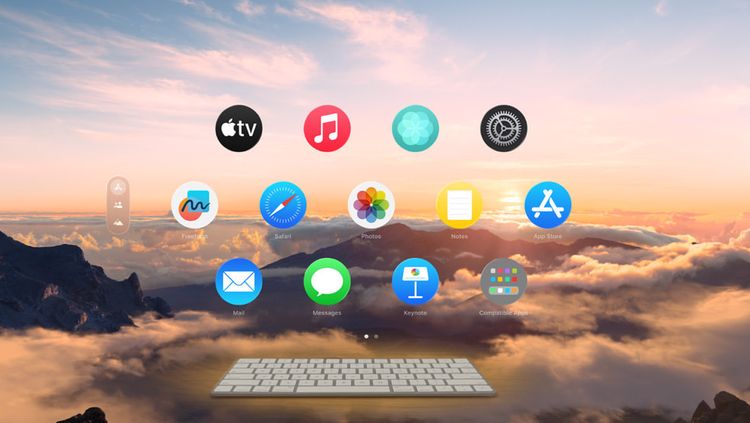
Apple's visionOS platform allows developers to combine traditional windows with 3D volumes and fully immersive spaces, while using technologies such as RealityKit and ARKit to understand the user's physical surroundings.

apple visionOS

That changes the fundamental relationship between the interface and the physical world. Imagine:

  • An interior design app that lets you place furniture in your actual room
  • A training application that puts a virtual instructor into your physical environment
  • A maintenance application that overlays instructions directly onto a piece of machinery
  • A property application that lets you explore a building before visiting it
  • A medical training platform that turns a three-dimensional model into something you can actually interact with

These experiences aren't simply “mobile apps with 3D graphics”. They are different ways of understanding information. And that's the important distinction. New technology doesn't automatically create a better product. It becomes valuable when it allows you to do something that was previously difficult, confusing or impossible.


The next generation of apps will probably be multimodal

If the first generation of digital interfaces was largely visual, and the second added touch, the next generation is going to be much more comfortable combining different types of interaction:

  1. You might speak to an app.
  2. It might show you something.
  3. You might point your camera at something.
  4. It might understand what you're looking at.
  5. You might type a question.
  6. It might search your data.
  7. You might receive a notification.
  8. You might respond by voice.
  9. You might then complete the final action on a traditional screen.

The boundaries between these interactions become much less important. Google's Gemini experience already demonstrates some of this direction, including the ability to ask questions about what's on your screen, understand images and take actions using voice.

This is why we're increasingly thinking about experiences rather than interfaces. An interface is one way of interacting with a product, and an experience is everything that happens around it. That distinction is going to matter enormously over the next few years.


Cross-platform will mean more than iOS and Android

When we say “cross-platform” today, we often mean building an application that works across iOS and Android. That's still important, but the definition is expanding. A genuinely cross-platform product of the future might include:

  • A mobile application
  • A web application
  • A conversational interface
  • Voice interactions
  • AI agents
  • Wearable experiences
  • Notifications
  • Smart glasses
  • In-car experiences
  • Integrations with other platforms
  • APIs that other AI systems can interact with

Suddenly, the question isn't: “Should we build an iOS app or an Android app?” It's: “Where should our product exist?” And the answer shouldn't be “everywhere”. That's an easy trap to fall into.

You don't need to build for every new device simply because the technology exists. The right approach is to understand where your users are, what they're trying to achieve and which interaction makes that journey easier. For some products, that will still be a brilliant mobile app. For others, the most valuable experience might be an AI agent. For some, it might be a combination of mobile, web and wearable.

And for a smaller number of products, spatial computing might genuinely unlock something that couldn't be achieved before. The technology should follow the problem, not the other way around.

 
invisible interface

The interface might become invisible

This is perhaps the most interesting possibility of all. What happens when technology becomes so good at anticipating and completing tasks that we stop thinking about the interface?

Consider a simple example…

You leave work every evening at roughly the same time. Your system knows you're heading home, notices that traffic is heavier than usual and suggests an alternative route. You don't open an app. You don't search for directions. You don't even necessarily ask for anything.

The technology simply provides the information when it is useful. That's a very different relationship with software. And it's why we're starting to talk about ideas such as Invisible UI or Zero UI.

The interface hasn't disappeared because the technology no longer needs one. It has disappeared because the technology has found a better way to fit into the user's life. Of course, this creates a delicate balance. If technology becomes too proactive, it can become annoying. If it makes decisions without explaining itself, it can become frustrating. And if it starts taking actions that users didn't expect, trust can disappear very quickly.

So invisible doesn't mean unaccountable. In fact, the opposite is true. The less visible an interface becomes, the more important trust, transparency, permissions and control become.


Privacy and security become part of the experience

There's another side to all of this that product owners can't afford to overlook. The more context your product understands, the more sensitive that context can become. An app that knows what you bought is one thing. An assistant that knows where you are, what you're saying, what's on your screen, what's in your calendar and what you're trying to achieve is something else entirely. And an AI agent that can take action using that information introduces another layer of risk.

The industry is already seeing concerns emerge around this.

Gartner predicts that by 2028, 25% of enterprise generative AI applications will experience at least five minor security incidents per year, compared with 9% in 2025. It specifically highlights the new attack surface created by agentic applications and technologies such as MCP. That doesn't mean AI agents are inherently unsafe.

It means we're asking software to do more, which means our approach to security needs to evolve alongside it. A traditional app might need to protect a user's account and data. An agentic product also needs to consider:

  • What is the agent allowed to do?
  • What information can it access?
  • When should it ask for confirmation?
  • How does the user know what it has done?
  • What happens if it makes the wrong decision?
  • Can the user undo it?

These aren't purely technical questions… they're UX questions, they're product questions and increasingly, they're business questions.


Trust will become one of the most important features

When a user taps a button, they generally understand what they're doing. When an AI makes a decision for them, the relationship is different. That's why the next generation of products will need to be particularly good at communicating confidence, uncertainty and control.

Imagine an AI travel agent saying: “I've found three hotels that match your preferences. The first is £40 cheaper, but it's 20 minutes further from the city centre.”

That's useful. Compare it with: “I've booked the cheapest hotel.”

The second might be technically efficient, but it's not necessarily what the user wanted. The best agentic experiences will understand when to act autonomously and when to involve the person. Sometimes the user should say yes, sometimes they should be able to review, sometimes they should be able to set rules in advance, and sometimes the system should simply provide information and leave the decision to them.

The technology might be capable of doing more, but good product design means knowing when it should.


So, what does this mean if you're building an app today?

This is probably the most important question. Because it's very easy to read about AI agents, smart glasses, spatial computing and voice interfaces and come away thinking: “Should we be rebuilding our entire product?”

And the answer is, probably not.

The biggest mistake product owners can make is trying to predict the future by adding every new technology to their roadmap. Instead, start with the experience. Ask yourself what your customers are actually trying to achieve:

  • Where are the points of friction?
  • Which tasks are repetitive?
  • Which interactions require too much navigation?
  • Where are people already using voice or AI to work around your product?
  • Which information would be useful to surface proactively?
  • Which decisions could be supported by better context?
  • And which parts of the experience genuinely benefit from being automated?

Those questions will tell you much more than simply asking whether your product needs an AI chatbot.


Start designing the product, not just the app

This is where our thinking around product development becomes particularly important. When we work on an app, we're not just thinking about what screens need to be designed or what features need to be developed. We're looking at the wider journey…

  • What problem are we solving?
  • Who are we solving it for?
  • What does the user need to accomplish?
  • What happens before they use the product?
  • What happens afterwards?
  • What systems does the product need to connect to?
  • What data does it need?

And, increasingly, what is the best way for someone to interact with it? Sometimes the answer will still be a mobile app. Sometimes it'll be a web application, sometimes it'll be an AI-powered feature within the existing experience and increasingly, it may be a combination of all of them.

This is why product strategy matters so much. You don't want to build something that looks impressive today but forces you into a complete rebuild every time the way people interact with technology changes. You want to create a product with a strong enough foundation that you can evolve the experience as technology and user behaviour evolve.


Build the foundations before chasing the future

There's a temptation with emerging technology to jump straight into the exciting part:

  • Let's build an agent.
  • Let's add voice.
  • Let's support smart glasses.
  • Let's create a conversational interface.

But before any of that, you need to know whether your underlying product can support it. That means thinking carefully about your architecture, APIs, data, authentication, integrations and permissions.

If your systems are fragmented, your data is inaccessible or your key business logic only exists inside a particular interface, creating an AI agent isn't going to magically solve the problem.

In fact, it can make it worse. The future-facing product is often built on fairly unglamorous foundations, with things such as good APIs, clear data structures, well-defined business rules, robust authentication, reliable integrations, strong observability, thoughtful permissions, good testing and a scalable architecture.

None of these things makes for particularly flashy product demos, but they're what allow you to build the flashy product experiences on top.


The next generation won't replace everything that came before

There's a tendency to talk about new technology as if it completely replaces the old. Web replaced desktop, mobile replaced web, AI will replace apps. We don't think that's how it will play out, the reality is usually much more interesting.

New interfaces are added to the ecosystem, and people use whichever one makes sense in the moment. There are still websites, there are still desktop applications, there are still mobile apps. And there will still be buttons, menus, forms and screens for a very long time.

The difference is that they'll exist alongside conversation, voice, agents, wearables and contextual experiences. The winning products won't necessarily be the ones with the most futuristic technology. They'll be the ones that use the right technology at the right moment.


So, what will the next generation of apps actually look like?

If we had to put it simply, we'd say they will be less about the app and more about the experience. They'll:

  • be conversational when conversation is easier
  • use voice when speaking makes more sense than typing
  • use AI agents when delegation is more useful than manual interaction
  • appear on watches, glasses, cars and other devices when the context calls for it
  • understand more about what users are trying to achieve
  • adapt to the situation rather than expecting users to adapt to the interface.

And, in some cases, they'll become almost invisible. But underneath all of that, the fundamentals won't change. The product still needs to solve a real problem. The experience still needs to make sense. The technology still needs to be reliable. And people still need to trust it.

That's perhaps the most important thing to remember when thinking about the future of apps. The next generation of apps won't be defined by the technology they use. They'll be defined by how naturally they fit into people's lives.

And for product owners, that creates a really exciting opportunity. You don't need to predict exactly what technology will exist five years from now. You need to build a product that is capable of evolving with it. Because the future of apps isn't about choosing between mobile, web, AI, voice or wearables. It's about creating an experience that can move between them. And that's where the next chapter of digital product development gets really interesting.


Want to build what's next?

The technology landscape is changing quickly, but building a future-ready product isn't about chasing every new trend. It's about understanding your users, identifying where technology can genuinely improve their experience and creating the right foundations to evolve as those expectations change.

If you've got an idea for the next generation of digital product, we'd love to explore where it could go.

 
contact us

Apply theses insights

Contact us to discuss how we can apply theses insights to your project