Insight

2026 app development trends we believe will matter the most

2026 app development trends we believe will matter the most

Anthony Main

Photo of Anthony Main

Anthony Main

founder

9 minutes

time to read

January 6, 2026

published

If the last few years of app development have taught us anything, it’s this: the loudest trends aren’t always the ones that last.

In 2026, we’re expecting less noise, fewer gimmicks, and a sharper focus on what genuinely makes digital products useful, scalable, and worth investing in. Some ideas that were once considered experimental are now becoming increasingly normal. Others are being simplified or absorbed into the background.

We asked Anthony (our CTO) what he really sees coming next, not what’s being talked about the most on LinkedIn, but what teams will actually be building, shipping, and maintaining. Here’s how 2026 is shaping up.
 

The rise of UI-less apps (And why that’s not as weird as it sounds)

We’re moving into an era where not every interaction needs a screen.

Invisible UI/UI-less apps (or at least UI-light ones) are becoming far more common. Think speakers, smart watches, headphones, chat interfaces, and ambient computing more broadly. Several years ago, these concepts would have been considered futuristic, now they’re already embedded in how people check the weather, control their homes, log health data, or ask quick questions on the go.

What’s changing is how intentionally products are being designed for these moments. Instead of forcing everything through a visual interface, teams are starting to ask:

  • What’s the fastest way for a user to get value here?
  • Does this interaction even need a screen?

For product teams, this shifts the focus from pixels to behaviour. Voice, gestures, notifications, and contextual triggers become first-class citizens in the experience, not afterthoughts bolted onto a mobile app.

In 2026, we think we’ll see more products designed to live with users, not just be opened by them.

We’ve been building our own Invisible UI-first app, which has helped shape our Discovery process for designing this kind of user experience. We’ll be sharing more on this soon!


On-device AI - Smarter apps without the cloud dependency

AI isn’t slowing down, but it is getting more efficient.

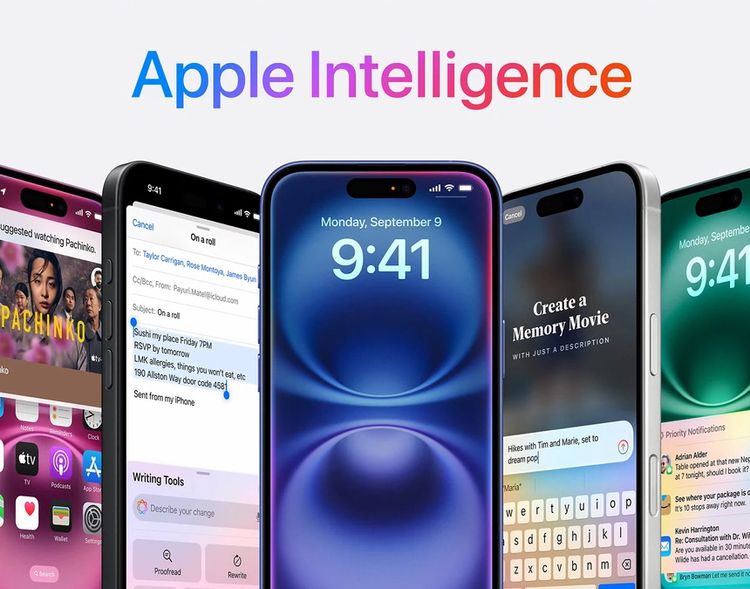
One of the biggest shifts we’re seeing is AI moving closer to the device itself. Instead of everything relying on large, cloud-hosted models, more processing is happening locally thanks to:

  • More efficient (small) language models
  • AI-optimised processors
  • Better hardware support across phones, wearables, and edge devices
  • Better SDK support for native AI implementations e.g. Apple Intelligence and Gemini Nano
on-device AI

Why does this matter? Because on-device AI means:

  • Faster responses
  • Improved privacy
  • Reduced reliance on constant connectivity
  • Lower long-term running costs

For users, it feels smoother and more trustworthy. For businesses, it opens up new possibilities, especially in regulated or data-sensitive environments where sending everything to the cloud just isn’t viable.

In 2026, “can this work on-device?” will be a standard product question, not an edge case.

If you’d like to learn more about the rise of on-device AI, be sure to read our insights.


Personalisation gets smarter

Personalisation is still on the rise, but not in a simple “more data equals better experience” way.

In 2026, the most effective personalisation is becoming more intentional. Users are becoming savvier. Expectations around privacy, consent, and control are getting higher. And products that ignore that reality tend to lose trust quickly.

What we’re seeing instead is a shift toward personalisation that’s:

  • Consented – users expect to understand what’s being personalised and why, with clear controls to opt in or out.
  • Privacy-preserving – more processing happens on-device, with less raw data being shared or stored centrally.
  • Contextual – driven by what the user is doing right now, not just historical profiles or static segments. AI helps make sense of these signals in real time, turning behaviour into actionable insights without overwhelming the user.

So the real unlock isn’t more data - it’s better signals, interpreted by better models, with tighter guardrails around how that intelligence is applied. Done well, personalisation feels helpful and invisible. Done badly, it feels intrusive. In 2026, that distinction matters more than ever.


The quiet comeback of web apps

Web apps, particularly Progressive Web Apps (PWAs), are becoming a more viable option again for certain products, with technologies like WebAssembly helping deliver near-native performance in the browser. With web push notifications on Apple devices, more capable mobile browsers, and the rise of vibe-coded platforms such as Replit and Lovable, Progressive Web Apps are closing the gap with native solutions for certain use cases.

But the constraints still matter.

On iOS, web push is tied to add-to-home-screen behaviour, and there are platform quirks that teams need to design around. Deep device integrations, performance-critical features, and highly immersive experiences still favour native (or cross-platform) approaches.

Where we are seeing web apps used more effectively in 2026 is when:

  • Distribution friction needs to be low
  • App Store overhead or tax (the technical debt and cost of user acquisition) is a genuine concern
  • Deep hardware access isn’t required
  • Speed to iterate matters more than platform-specific polish

For high-engagement consumer products, native still wins. For operational tools, internal platforms, and fast-moving products, web is firmly back in the conversation.

 
Automation

Automation and Integration become the backbone

Automation isn’t flashy, but it can be pretty transformative.

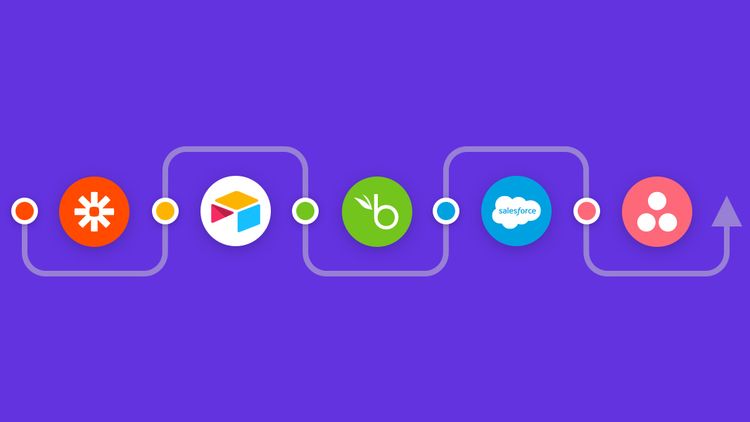
Tools like Zapier, Make, and (our preference) n8n are increasingly being used as core components of digital products, not just internal shortcuts. These no-code and low-code platforms allow teams to connect a wider range of systems, reduce manual effort, and build workflows that would have required custom development not long ago.

What’s changing in 2026 is the scale of this integration.

Instead of connecting two or three tools, we’re now seeing entire ecosystems working together (CRMs, analytics platforms, internal tools, and third-party APIs) all orchestrated into cohesive solutions. AI, along with the introduction of MCPs and agentic workflows, has significantly reduced the effort required to design, manage, and evolve these integrations over time.

We don’t think this will replace bespoke development (it's a perfect extension). We think teams will be smarter about using the right level of abstraction in the right places, and letting teams focus their engineering effort where it actually adds value.


AI everywhere (and why that’s no longer exciting)

AI will be everywhere in 2026 and that’s precisely why it won’t be impressive on its own.

We’re already seeing AI used to enhance existing products rather than reinvent them entirely. Smarter search, better recommendations, more helpful assistants and improved decision-making behind the scenes.

This trend will accelerate.

AI will most likely become a standard feature - something users expect, not something that differentiates. Much like cloud hosting or mobile support, it’ll fade into the background unless it’s done badly.

For product teams, this raises the bar. Simply “adding AI” won’t be enough. The focus will shift to:

  • How well it’s integrated
  • Whether it genuinely improves the experience
  • How reliably it performs over time

The AI novelty is on its way out, however, it’s the craft that will remain.


Smaller models, smarter use cases

While large language models continue to evolve, we’re also seeing a strong move toward small language models designed for specific tasks.

These models are:

  • Cheaper to run
  • Easier to control
  • Faster in production
  • Better suited to focused, well-defined problems

Alongside this, training data is also improving. Instead of throwing more data at bigger models, teams are refining datasets to improve quality and relevance.


Agentic AI - useful micro-flows, not fully autonomous free-for-alls?

Agentic AI is being talked about a lot more right now and in 2026, it’s starting to settle into something more practical. What’s becoming common is agent-like behaviour in tightly defined flows:

  • Book this meeting
  • Draft that response
  • Summarise and file this document
  • Route this task to the right place

These micro-agents operate within clear boundaries, with limited permissions and predictable outcomes. They save time without introducing unnecessary risk.

What’s far less common is fully autonomous agents with broad permissions acting independently across systems. Trust, auditability, and failure modes are still hard problems, especially in regulated or business-critical environments. In practice, 2026 is going to be about controlled autonomy, not handing the keys over entirely.

Image
 

Is the AI bubble going to burst?

Rather than an AI “bubble burst”, what we’re going to see is consolidation and a reset in expectations. Many thin SaaS layers built on top of generic AI capabilities won’t survive as those same features are absorbed into major platforms and operating systems. Chat interfaces, summarisation, basic automation - these are becoming fundamentals.

At the same time, investment is shifting. Instead of rewarding impressive demos, the focus is shifting toward products that can prove long-term value, such as:

  • Sustainable business models
  • Strong routes to market and distribution
  • Access to high-quality or proprietary data
  • AI that’s embedded into real workflows, not bolted on
  • Trust, compliance, and governance built in from the start

AI isn’t disappearing. It’s becoming infrastructure/tooling, and the products that succeed in 2026 will be the ones that build on top of that reality, not around novelty.


What else is showing up on the 2026 roadmap?

A few quieter shifts are starting to appear consistently in forward-looking product plans and they’re worth paying attention to. Passkeys and passwordless authentication are moving toward default. This is a significant UX and security improvement, reducing friction for users while lowering risk for businesses.

Accessibility and compliance pressure are increasing, particularly for EU-facing products. Accessibility is no longer a “nice to have”, it’s becoming a baseline expectation, with legal and reputational consequences for getting it wrong.

And finally, we’re seeing more emphasis on provenance and trust features such as:

  • Audit trails
  • Admin controls
  • Clear explanations of “why did the system do that?”

As products become more intelligent, users (and regulators) want transparency, not magic.


So what does that mean for app development?

The big takeaway for 2026 isn’t chasing what’s trending, but more about maturity.

Asking better questions, getting smarter trade-offs and focusing more on outcomes than technology for technology’s sake. The teams that succeed won’t be the ones shouting the loudest about AI or shipping the flashiest features. They’ll already be quietly building products that:

  • Fit naturally into users’ lives
  • Scale without unnecessary complexity
  • Use modern tools thoughtfully, not blindly

And that’s where real expertise shows.

If you’re thinking about where your product needs to head next (whether that’s AI, automation, or simply building something that lasts), understanding what’s coming is a good place to start. And having the right people around you makes all the difference.

 
contact us

Apply theses insights

Contact us to discuss how we can apply theses insights to your project